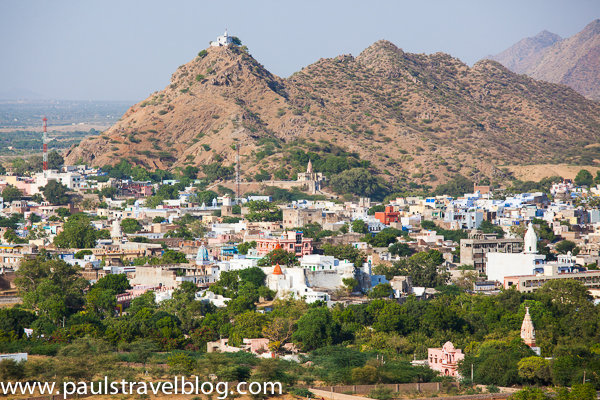
Dakar, Senegal
Complete list of countries, with links
November 19, 2008
October 14, 2008
Gay Jordan--A Pilgrimage
Jordan is fairly liberal and tolerant for an Arab country, and there is even genuine gay nightlife in Amman, including bar/club RGB (on the Third Circle). But RGB is hardly the sort of place that a first world gay tourist would find too exciting--nothing compared to what is on offer in Beirut, I'm sure, and in some ways not even matching Bahrain's bars. There is, however, one place I felt strongly about visiting, a Biblical site not featured on too many Holy Land tour itineraries, but one that has made a genuine impact on the relationship between sexual minorities and the world's great monotheistic religions: Sodom.

Sodom today is known as Bab adh-Dhraa, and it is not much more than a tell, or archaeological hill, with parts of wall and gate peaking through a jumble of rocks. But back in Old Testament times it was the foremost of the five "cities of the plain," the town's whose attempted gang rape of two male angels resulted in its total destruction.
From Genesis 19:
The two angels arrived at Sodom in the evening, and Lot was sitting in the gateway of the city. When he saw them, he got up to meet them and bowed down with his face to the ground. . . He prepared a meal for them, baking bread without yeast, and they ate. Before they had gone to bed, all the men from every part of the city of Sodom—both young and old—surrounded the house. They called to Lot, "Where are the men who came to you tonight? Bring them out to us so that we can have sex with them."
Lot went outside to meet them and shut the door behind him and said, "No, my friends. Don't do this wicked thing. Look, I have two daughters who have never slept with a man. Let me bring them out to you, and you can do what you like with them. But don't do anything to these men, for they have come under the protection of my roof."
"Get out of our way," they replied. And they said, "This fellow came here as an alien, and now he wants to play the judge! We'll treat you worse than them." They kept bringing pressure on Lot and moved forward to break down the door.
But the men inside reached out and pulled Lot back into the house and shut the door. Then they struck the men who were at the door of the house, young and old, with blindness so that they could not find the door.
The two men said to Lot, "Do you have anyone else here—sons-in-law, sons or daughters, or anyone else in the city who belongs to you? Get them out of here, because we are going to destroy this place. The outcry to the Lord against its people is so great that he has sent us to destroy it. . . . "
Early the next morning Abraham got up and returned to the place where he had stood before the Lord. He looked down toward Sodom and Gomorrah, toward all the land of the plain, and he saw dense smoke rising from the land, like smoke from a furnace. So when God destroyed the cities of the plain, he remembered Abraham, and he brought Lot out of the catastrophe that overthrew the cities where Lot had lived.
By its destruction (some say that an earthquake released trapped gases, which ignited and set the town aflame) Sodom became the most vivid evidence that the Judeo-Christian God disapproves of homosexuality. Of course, reading the passage it would seem that it actually condemns gang homosexual rape (while condoning or even encouraging the offering up of one's own daughters for the same treatment). More progressive religious types read the passages as condemning Sodom for its ill treatment of guests, and Sodom and the other cities of the plain were known for generally being miserly and cruel. If Sodom never existed, or if it had not gotten such a memorable mention in the Bible, would the great Semitic religions have a different relationship with sexual minorities? At the very least, would anti-gay attitudes be less infectious without such a graphic example of God's wrath?
I am inclined to think not, given the confused and twisted message in the remainder of Genesis 19. If this latter passage doesn't give cause to question the moral compass of the entire chapter, I'm not sure what would--if the story of Sodom had never been told, people would just pick another part of the Bible to support their prejudices:
Lot and his two daughters left Zoar and settled in the mountains, for he was afraid to stay in Zoar. He and his two daughters lived in a cave. One day the older daughter said to the younger, "Our father is old, and there is no man around here to lie with us, as is the custom all over the earth. Let's get our father to drink wine and then lie with him and preserve our family line through our father."
That night they got their father to drink wine, and the older daughter went in and lay with him. He was not aware of it when she lay down or when she got up.
The next day the older daughter said to the younger, "Last night I lay with my father. Let's get him to drink wine again tonight, and you go in and lie with him so we can preserve our family line through our father." So they got their father to drink wine that night also, and the younger daughter went and lay with him. Again he was not aware of it when she lay down or when she got up.
So both of Lot's daughters became pregnant by their father.
Whether offering up your daughters for gang rape or drunken incest is worse, the Bible is unclear--both seem acceptable (or even admirable) under certain circumstances. The message I take away from Genesis 19 is hardly "God hates gays."

Sodom today is known as Bab adh-Dhraa, and it is not much more than a tell, or archaeological hill, with parts of wall and gate peaking through a jumble of rocks. But back in Old Testament times it was the foremost of the five "cities of the plain," the town's whose attempted gang rape of two male angels resulted in its total destruction.
From Genesis 19:
The two angels arrived at Sodom in the evening, and Lot was sitting in the gateway of the city. When he saw them, he got up to meet them and bowed down with his face to the ground. . . He prepared a meal for them, baking bread without yeast, and they ate. Before they had gone to bed, all the men from every part of the city of Sodom—both young and old—surrounded the house. They called to Lot, "Where are the men who came to you tonight? Bring them out to us so that we can have sex with them."
Lot went outside to meet them and shut the door behind him and said, "No, my friends. Don't do this wicked thing. Look, I have two daughters who have never slept with a man. Let me bring them out to you, and you can do what you like with them. But don't do anything to these men, for they have come under the protection of my roof."
"Get out of our way," they replied. And they said, "This fellow came here as an alien, and now he wants to play the judge! We'll treat you worse than them." They kept bringing pressure on Lot and moved forward to break down the door.
But the men inside reached out and pulled Lot back into the house and shut the door. Then they struck the men who were at the door of the house, young and old, with blindness so that they could not find the door.
The two men said to Lot, "Do you have anyone else here—sons-in-law, sons or daughters, or anyone else in the city who belongs to you? Get them out of here, because we are going to destroy this place. The outcry to the Lord against its people is so great that he has sent us to destroy it. . . . "
Early the next morning Abraham got up and returned to the place where he had stood before the Lord. He looked down toward Sodom and Gomorrah, toward all the land of the plain, and he saw dense smoke rising from the land, like smoke from a furnace. So when God destroyed the cities of the plain, he remembered Abraham, and he brought Lot out of the catastrophe that overthrew the cities where Lot had lived.
By its destruction (some say that an earthquake released trapped gases, which ignited and set the town aflame) Sodom became the most vivid evidence that the Judeo-Christian God disapproves of homosexuality. Of course, reading the passage it would seem that it actually condemns gang homosexual rape (while condoning or even encouraging the offering up of one's own daughters for the same treatment). More progressive religious types read the passages as condemning Sodom for its ill treatment of guests, and Sodom and the other cities of the plain were known for generally being miserly and cruel. If Sodom never existed, or if it had not gotten such a memorable mention in the Bible, would the great Semitic religions have a different relationship with sexual minorities? At the very least, would anti-gay attitudes be less infectious without such a graphic example of God's wrath?
I am inclined to think not, given the confused and twisted message in the remainder of Genesis 19. If this latter passage doesn't give cause to question the moral compass of the entire chapter, I'm not sure what would--if the story of Sodom had never been told, people would just pick another part of the Bible to support their prejudices:
Lot and his two daughters left Zoar and settled in the mountains, for he was afraid to stay in Zoar. He and his two daughters lived in a cave. One day the older daughter said to the younger, "Our father is old, and there is no man around here to lie with us, as is the custom all over the earth. Let's get our father to drink wine and then lie with him and preserve our family line through our father."
That night they got their father to drink wine, and the older daughter went in and lay with him. He was not aware of it when she lay down or when she got up.
The next day the older daughter said to the younger, "Last night I lay with my father. Let's get him to drink wine again tonight, and you go in and lie with him so we can preserve our family line through our father." So they got their father to drink wine that night also, and the younger daughter went and lay with him. Again he was not aware of it when she lay down or when she got up.
So both of Lot's daughters became pregnant by their father.
Whether offering up your daughters for gang rape or drunken incest is worse, the Bible is unclear--both seem acceptable (or even admirable) under certain circumstances. The message I take away from Genesis 19 is hardly "God hates gays."
October 13, 2008
Faces of Jordan
Politically, the region that is called the Levant is now divided into five pieces--Lebanon, Syria, Israel, Palestine and Jordan. But there are ways to divide the area into historically/culturally meaningful chunks beyond national boundaries. One is to consider Jewish Israel as a separate entity onto itself, while considering the predominantly Arab regions of Palestine, Lebanon, Syria and Jordan together. Another is to consider the region as made up of three major religious communities: Arab Muslims, Arab Christians and Israeli Jews. A third is to consider Syria and Lebanon together, as they share a great deal in common and were the countries of the early twentieth century French Mandate, and Israel, Palestine and Jordan together, as being part of the British colonial world. No doubt there are many other ways to think about this complex region.
I believe, however, that the best way of thinking about the Levant is coastal and non-coastal. Over much of history, whether a given region was within striking distance of an active port meant a great deal (most of the world's population still lives near a coast or navigable river), and this was no less the case in the Levant. Coastal Levant, meaning Lebanon, Syria as far east as the great cities of Aleppo and Damascus and Israel/Palestine, had constant communication with the Mediterranean world, for better or for worse. Over thousands of years these areas saw countless empires, people and ideas come and go. The desert interior, meaning most of Jordan and the Syrian desert, were one step removed from the great movements on the coast, a relative wilderness. Coastal Levant is a world of ancient walled cities, such as Acre, Byblos and Tartus, and the more inland Damascus and Aleppo. While there are cities of historical importance in the non-coastal Levant as well, including Palmyra and Petra, they are more the exceptions than the rule, and faded with the growth of maritime trade--even today, the non-coastal Levant is populated in significant part by nomadic Bedouin, herding sheep (see post of 4.15).
That it is largely desert/non-coastal gives Jordan a unique character among the countries of the Levant. Jordan has a desert/bedouin identity, a very much "Arab" identity not made murky by the history of the coastal Levant (see post of 4.25). Rather than being associated with great Mediterranean empires, contact with the West and the luxuries of Silk Road trade, Jordan far more sees itself as a creature of the desert, a country that looks eastward to Arabia rather than westward. President Bashar al-Assad of Syria is almost always portrayed in a western suit or military uniform. King Abdullah of Jordan is seen in posters just as often in Arab jelabiyyah and keffiyeh. Jordanian currency? "Dinars" (as in other Arab countries) rather than the "pounds" used in Syria and Lebanon. The Jordanian monarchy traces its roots to Mohammed and the WWI Arab Revolt, and to the familial and loyalty bonds of the Arab bedouin. In Jordan, bedouin culture is to some extent placed on a pedestal as national heritage, while one Syrian man from coastal Lattakia told us (contrary to fact) that Syria had "only a few bedouin families" (perhaps somehow embarrassed of their existence and preferring to think of Syria as a country of ancient and sophisticated cities and not desert nomads). Another Syrian man questioned Syrians' "Arabness" altogether, saying that despite the name of the country--Syrian Arab Republic--Syrians weren't Arab at all but a mixture of many races (see post of 4.25).
Modern Jordan is in part a creation of the British, and Jordanian King Abdullah's mother is British--there is no doubt that it is today one of the most "western-friendly" of the Arab countries. But it is with this frame of mind, that Jordan is just as much a country of the Arabian desert as it is a country of the Levant, that I wished to preface some portraits from Jordan.
Bedouin boy, Wadi Rum

Among the most interesting bedouin populations of Jordan that travelers are likely to run into are the Bdul of Petra. The Bdul are the most recent "residents" of Petra, having moved into the rock-cut tombs and facades in the last few hundred years. Historically, the Bdul have been the most down-trodden of the Bedouin groups of Jordan, among the poorest and most looked down on. Most recently, in an effort to further the preservation of the World Heritage Site, the Jordanian government has evacuated the Bdul from the Petra ruins, placing them into a town settlement nearby and reportedly offering modern conveniences, health care and education. But many continue to live in rock-cut caves just outside of the central ruins and others commute in to conduct business with the tourists. In a "power sharing" agreement set up by the government, businesses and horses/carriages "up to" the Treasury (just short of Petra "city center") are operated by "outside" Jordanians (and Egyptians) authorized by the government, while those "past" the Treasury are run by the Bdul. (See post of 10.9 on Petra.) The Bdul who work in Petra are among tourists' greatest resources, offering friendly chatter in multiple languages, directions and tea almost everywhere you turn, either gratuitously or in exchange for a quick look at their merchandise. Careful though, or you'll end up being dragged into a confusing sort of air arm wrestling, as happened with us on more than a few occasions.
Elderly Bdul woman and daughter, both souvenir vendors (and damned compelling ones), Petra


Bdul boy in front of the Treasury, Petra

Amman (then known as Philadelphia) was one of a string of Roman cities located in now western Jordan, but presents relatively little in terms of Roman ruins, far less than the ruins of Jerash to the north or cities in now Syria. That said, Amman is today a fairly dynamic capital, with ample investment coming in from both the West and the Gulf, and a steady flow of expats and tourists.
Some residents of Amman


Modern Amman was actually founded by Circassians, Muslims from the Caucasus who moved into the Ottoman Empire who now constitute a significant ethnic minority in Jordan. The "suburb" of Wadi as-Seer near Amman remains a center of Circassian Jordan.
Circassian brother and sister in headscarf and karate gi.
I believe, however, that the best way of thinking about the Levant is coastal and non-coastal. Over much of history, whether a given region was within striking distance of an active port meant a great deal (most of the world's population still lives near a coast or navigable river), and this was no less the case in the Levant. Coastal Levant, meaning Lebanon, Syria as far east as the great cities of Aleppo and Damascus and Israel/Palestine, had constant communication with the Mediterranean world, for better or for worse. Over thousands of years these areas saw countless empires, people and ideas come and go. The desert interior, meaning most of Jordan and the Syrian desert, were one step removed from the great movements on the coast, a relative wilderness. Coastal Levant is a world of ancient walled cities, such as Acre, Byblos and Tartus, and the more inland Damascus and Aleppo. While there are cities of historical importance in the non-coastal Levant as well, including Palmyra and Petra, they are more the exceptions than the rule, and faded with the growth of maritime trade--even today, the non-coastal Levant is populated in significant part by nomadic Bedouin, herding sheep (see post of 4.15).
That it is largely desert/non-coastal gives Jordan a unique character among the countries of the Levant. Jordan has a desert/bedouin identity, a very much "Arab" identity not made murky by the history of the coastal Levant (see post of 4.25). Rather than being associated with great Mediterranean empires, contact with the West and the luxuries of Silk Road trade, Jordan far more sees itself as a creature of the desert, a country that looks eastward to Arabia rather than westward. President Bashar al-Assad of Syria is almost always portrayed in a western suit or military uniform. King Abdullah of Jordan is seen in posters just as often in Arab jelabiyyah and keffiyeh. Jordanian currency? "Dinars" (as in other Arab countries) rather than the "pounds" used in Syria and Lebanon. The Jordanian monarchy traces its roots to Mohammed and the WWI Arab Revolt, and to the familial and loyalty bonds of the Arab bedouin. In Jordan, bedouin culture is to some extent placed on a pedestal as national heritage, while one Syrian man from coastal Lattakia told us (contrary to fact) that Syria had "only a few bedouin families" (perhaps somehow embarrassed of their existence and preferring to think of Syria as a country of ancient and sophisticated cities and not desert nomads). Another Syrian man questioned Syrians' "Arabness" altogether, saying that despite the name of the country--Syrian Arab Republic--Syrians weren't Arab at all but a mixture of many races (see post of 4.25).
Modern Jordan is in part a creation of the British, and Jordanian King Abdullah's mother is British--there is no doubt that it is today one of the most "western-friendly" of the Arab countries. But it is with this frame of mind, that Jordan is just as much a country of the Arabian desert as it is a country of the Levant, that I wished to preface some portraits from Jordan.
Bedouin boy, Wadi Rum

Among the most interesting bedouin populations of Jordan that travelers are likely to run into are the Bdul of Petra. The Bdul are the most recent "residents" of Petra, having moved into the rock-cut tombs and facades in the last few hundred years. Historically, the Bdul have been the most down-trodden of the Bedouin groups of Jordan, among the poorest and most looked down on. Most recently, in an effort to further the preservation of the World Heritage Site, the Jordanian government has evacuated the Bdul from the Petra ruins, placing them into a town settlement nearby and reportedly offering modern conveniences, health care and education. But many continue to live in rock-cut caves just outside of the central ruins and others commute in to conduct business with the tourists. In a "power sharing" agreement set up by the government, businesses and horses/carriages "up to" the Treasury (just short of Petra "city center") are operated by "outside" Jordanians (and Egyptians) authorized by the government, while those "past" the Treasury are run by the Bdul. (See post of 10.9 on Petra.) The Bdul who work in Petra are among tourists' greatest resources, offering friendly chatter in multiple languages, directions and tea almost everywhere you turn, either gratuitously or in exchange for a quick look at their merchandise. Careful though, or you'll end up being dragged into a confusing sort of air arm wrestling, as happened with us on more than a few occasions.
Elderly Bdul woman and daughter, both souvenir vendors (and damned compelling ones), Petra


Bdul boy in front of the Treasury, Petra

Amman (then known as Philadelphia) was one of a string of Roman cities located in now western Jordan, but presents relatively little in terms of Roman ruins, far less than the ruins of Jerash to the north or cities in now Syria. That said, Amman is today a fairly dynamic capital, with ample investment coming in from both the West and the Gulf, and a steady flow of expats and tourists.
Some residents of Amman


Modern Amman was actually founded by Circassians, Muslims from the Caucasus who moved into the Ottoman Empire who now constitute a significant ethnic minority in Jordan. The "suburb" of Wadi as-Seer near Amman remains a center of Circassian Jordan.
Circassian brother and sister in headscarf and karate gi.
October 12, 2008
Accidental Leaders
One of the peculiarities of this part of the world is that two of its leaders, President Bashar al-Assad of Syria (also see post of 5.4) and King Abdullah II of Jordan, came to power almost accidentally, and at young ages.
Until fairly close to his ascension to the Presidency of Syria, Bashar al-Assad had no military or political role in Syria, and instead was on his way to being an ophthalmologist. In 1994, Bashar was rushed back to Syria from London when his older brother Basil, the son who had been groomed to succeed to Syria's monarchic presidency, died in a car crash. Bashar trained quickly to become Syria's next president and assumed the title in 2001 at the early age of 35, when his father Hafez al-Assad passed away. Neither Bashar nor his father ever expected Bashar to be in the role of leading the country; everyone had expected the much loved Basil to be the next President of Syria.
Similarly, the next in line to Jordan's throne after King Hussein was, for the longest time, his brother Hassan, and not his son Abdullah. A mere two weeks before the death of King Hussein, he suddenly named his son as successor, replacing Hassan as Crown Prince. King Abdullah was crowned in 1999 at the age of 37. It's not at all clear what made King Hussein seemingly change his mind at the last minute, but one point of controversy that may have prevented an earlier designation of Abdullah as Crown Prince was his "Arabness." King Abdullah's mother was British and not Arab, he went to school in Britain and the U.S., and, according to one Jordanian I spoke to, his Arabic language skills at the time of his own coronation were not sufficient to give an address.
Presidents Hafez and Bashar al-Assad, Damascus, Syria

King Abdullah, Wadi Musa, Jordan

This is one of the risks of monarchy--people can rise to power in unexpected, less than ideal ways: Fathers can die when their sons are too young and ill-prepared; the next in line may be inadequate in capacity or temperament; rivalries can result in bloodshed, leading the most murderous to the throne (indeed entire royal families have been wiped out in order to "fix" succession). In comparison with such scenarios, Bashar al-Assad and King Abdullah both seem meritorious and successful leaders of their respective country, their popularity (and that of their families) attested to by the numerous pictures of them posted all over Syria and Jordan. Their relatively young age and lack of experience (President-Elect Obama is 47, a decade older than King Abdullah when he was coronated and twelve years older than Bashar al-Assad when he was inaugurated) seem not to be affecting their rule too negatively. The only real complaint we heard about either was that Bashar was not as "strong" as his father or brother (because "Arab countries need a strong leader"), but even the Syrian who made this complaint followed it by expressing his hope that as Bashar grew into the position, he would develop a stronger hand.
And, even if monarchies can be somewhat arbitrary, it is important to keep in mind that Presidents Bush and Ahmedinejad, two of the least popular leaders in the world, were both democratically elected (although the former's first election was "stolen") and one of the scariest recent near-misses in unprepared leadership was John McCain's irresponsible and bizarre selection of Sarah Palin as his running mate. Democracies can sometimes result in disastrous rule, while hereditary power can sometimes result in ideal leadership (see post of 7.13 on the Aga Khan, who was selected by his grandfather to succeed to the title).
Given all of the uncertainties in this part of the world, its great geopolitical complications (and with them the potential for conflict and disaster), a great deal of responsibility was thrust on these two men, suddenly and unexpectedly--let us wish them stable, prosperous and peaceful reigns.
Until fairly close to his ascension to the Presidency of Syria, Bashar al-Assad had no military or political role in Syria, and instead was on his way to being an ophthalmologist. In 1994, Bashar was rushed back to Syria from London when his older brother Basil, the son who had been groomed to succeed to Syria's monarchic presidency, died in a car crash. Bashar trained quickly to become Syria's next president and assumed the title in 2001 at the early age of 35, when his father Hafez al-Assad passed away. Neither Bashar nor his father ever expected Bashar to be in the role of leading the country; everyone had expected the much loved Basil to be the next President of Syria.
Similarly, the next in line to Jordan's throne after King Hussein was, for the longest time, his brother Hassan, and not his son Abdullah. A mere two weeks before the death of King Hussein, he suddenly named his son as successor, replacing Hassan as Crown Prince. King Abdullah was crowned in 1999 at the age of 37. It's not at all clear what made King Hussein seemingly change his mind at the last minute, but one point of controversy that may have prevented an earlier designation of Abdullah as Crown Prince was his "Arabness." King Abdullah's mother was British and not Arab, he went to school in Britain and the U.S., and, according to one Jordanian I spoke to, his Arabic language skills at the time of his own coronation were not sufficient to give an address.
Presidents Hafez and Bashar al-Assad, Damascus, Syria

King Abdullah, Wadi Musa, Jordan

This is one of the risks of monarchy--people can rise to power in unexpected, less than ideal ways: Fathers can die when their sons are too young and ill-prepared; the next in line may be inadequate in capacity or temperament; rivalries can result in bloodshed, leading the most murderous to the throne (indeed entire royal families have been wiped out in order to "fix" succession). In comparison with such scenarios, Bashar al-Assad and King Abdullah both seem meritorious and successful leaders of their respective country, their popularity (and that of their families) attested to by the numerous pictures of them posted all over Syria and Jordan. Their relatively young age and lack of experience (President-Elect Obama is 47, a decade older than King Abdullah when he was coronated and twelve years older than Bashar al-Assad when he was inaugurated) seem not to be affecting their rule too negatively. The only real complaint we heard about either was that Bashar was not as "strong" as his father or brother (because "Arab countries need a strong leader"), but even the Syrian who made this complaint followed it by expressing his hope that as Bashar grew into the position, he would develop a stronger hand.
And, even if monarchies can be somewhat arbitrary, it is important to keep in mind that Presidents Bush and Ahmedinejad, two of the least popular leaders in the world, were both democratically elected (although the former's first election was "stolen") and one of the scariest recent near-misses in unprepared leadership was John McCain's irresponsible and bizarre selection of Sarah Palin as his running mate. Democracies can sometimes result in disastrous rule, while hereditary power can sometimes result in ideal leadership (see post of 7.13 on the Aga Khan, who was selected by his grandfather to succeed to the title).
Given all of the uncertainties in this part of the world, its great geopolitical complications (and with them the potential for conflict and disaster), a great deal of responsibility was thrust on these two men, suddenly and unexpectedly--let us wish them stable, prosperous and peaceful reigns.
October 9, 2008
Petra

Remember when you were told that that place in Indiana Jones and the Last Crusade was real? I do, and I remember thinking that Jordan seemed an awfully distant place which I wasn't sure at all that I would ever visit. The Nabataean ruins of Petra clearly represent a pinnacle in rock-cut architecture, certainly in size and scale if not in beauty; in some ways the city is like a fantasy that shows man's imagination at some of its best. The site is well deserving of its reputation and fame, if not only for the impressiveness of the manmade structures themselves, for the drama and mystery of their setting.
I do not have much else to say about Petra, but to go without showing you at least some pictures of the site would be a crime. Before the photos, a tiny bit of historical background: Petra was the capital of the Nabataeans, an Aramaic-speaking Semitic kingdom that by location was able to control trade routes between the Levant and points further east. Petra continued as a fairly prosperous city even after the Nabataeans were subsumed by the Romans around 100 AD, and survived as a Christian town, but fell into ruin around the time of the seventh century Arab conquest.
The Siq, the canyon leading into the "city center" of Petra


The Treasury, the most imposing and dramatic of Petra's structures, cut into the cliff at a clearing and bend in the canyon


Inside of the Treasury, a largely blank set of rooms cut into beautiful stone

Some other examples of the marvelous natural colors and patterns of Petra sandstone


Other facades, near the Treasury


The Great Temple, located in Petra's "city center"

The Palace Tomb. Most of Petra's structures are rock-cut facades with small, relatively blank rooms inside. While some of these were used as churches later in Petra's history, and the Bedouin made them homes in more recent times, it would seem that most were originally intended as tombs.

The Monastery, located well uphill from the Siq and city center--even larger than the Treasury

There are Nabataean rock-cut trails all over Petra, connecting the various "buildings" to vantage points and "high places" used for worship.

October 5, 2008
Faces of Egypt
Egypt is an Arab country, and indeed the Arab conquest came quickly to Egypt given its geographical proximity to the Arabian Peninsula. Nonetheless, Egypt represents a far more ancient culture, and Egyptian Arab identity, to me, seems a particularly distinct one compared to the Arab cultures of the Gulf or even the Levant, both areas in which the modern nation states do not seem to represent a distinct/discrete ethnic identity or culture.
Other than the Nubians originally from southern Egypt and perhaps the Bedouin in the Sinai, we did not encounter significant ethnic minorities, although perhaps it could be said that the Copts represent an Egyptian line with less Arab genetic input. Some pictures:
Vendor, Alexandria. In Alexandria we noticed that many Egyptians seem to have green eyes; it seemed less common in other parts of Egypt.


Scholar, Al Azhar Mosque. This man, to me, seemed somewhat "un-Egyptian" in appearance--he said that his family was from the Delta region.

Perhaps part of this is due to Ramadan, but Egypt feels far more religious than most of the other Islamic countries we have traveled to. The calls to prayer seem louder and more urgent and public worship far more common and conspicuous. Most shockingly (though perhaps that is too strong a word), there is an astonishing number of men who walk around with zebibas ("raisins"), which are forehead prayer bumps from repeated prostration during prayer. While some Egyptian men seem to wear these marks proudly as a testament to how devout they are, it is generally believed that they are intentionally inflicted (perhaps by scraping one's head on the carpet in an exaggerated manner while praying), rather than a necessary consequence of frequent prayer--little else could explain the absence of such marks on the foreheads of the devout in other Islamic countries.
Other than the Nubians originally from southern Egypt and perhaps the Bedouin in the Sinai, we did not encounter significant ethnic minorities, although perhaps it could be said that the Copts represent an Egyptian line with less Arab genetic input. Some pictures:
Vendor, Alexandria. In Alexandria we noticed that many Egyptians seem to have green eyes; it seemed less common in other parts of Egypt.


Scholar, Al Azhar Mosque. This man, to me, seemed somewhat "un-Egyptian" in appearance--he said that his family was from the Delta region.

Perhaps part of this is due to Ramadan, but Egypt feels far more religious than most of the other Islamic countries we have traveled to. The calls to prayer seem louder and more urgent and public worship far more common and conspicuous. Most shockingly (though perhaps that is too strong a word), there is an astonishing number of men who walk around with zebibas ("raisins"), which are forehead prayer bumps from repeated prostration during prayer. While some Egyptian men seem to wear these marks proudly as a testament to how devout they are, it is generally believed that they are intentionally inflicted (perhaps by scraping one's head on the carpet in an exaggerated manner while praying), rather than a necessary consequence of frequent prayer--little else could explain the absence of such marks on the foreheads of the devout in other Islamic countries.
Subscribe to:
Posts (Atom)